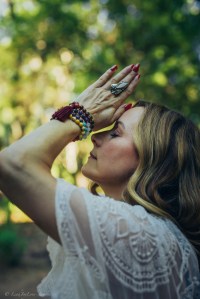
There is a reason why you will not hear me say “namaste” at the end of our practice. I have chosen to not use it in the way you might think. I’ll explain.
This word has been culturally appropriated by the West. 71.3% of yoga teachers in the US are White and 86% are female (Zippia, 2022). As a person that falls right in this demographic, I feel as though I need to acknowledge this, and it is my responsibility to create a welcoming space for all – but especially for those that do not look like me. I have learned Sanskrit words and do use some posture names in my practice as my intention is to keep the culture alive through breath and movement. This is important to me personally as I am learning how to respect the long history of yoga. But “namaste” is problematic.
“Namaste” is a greeting, a hello. It’s more appropriate to use it when people walk in the door. It does not mean “thank you” or “the light in me honors the light in you” or any of that jargon you’ve heard at the end of a yoga class. I aim to lead with honesty. That all sounds cool, sounds flowery & nice, but I am a human with flaws. I prefer, “THANK YOU! Thank you for coming, thank you for sharing your space, your breath, your time. Thank you for letting me guide you.” It might be more meaningful to actually tell a student these words. Express kindness & gratitude in a way that people can really understand, from your heart, and in a way they can then take it off their mat into their day and share it with others. THAT’S the Yoga! “Namaste” isn’t going to land for a total stranger standing in line at Starbucks, but “thank you” just might.
I may use it occasionally at the end of practice to acknowledge a “rebirth,” a new start of the day as the person comes off their mat (a hello or greeting to a new version of one’s self – but to me, personally, this is still a bit of a stretch). The big difference here is that I will explain my intention.
Most things evolve, even words. We all make choices that align with our heart, our intent; as a leader we must be mindful with how we lead. There is a Sanskrit word for “intention” and that is “Sankalpa.” My heartfelt desire, my Sankalpa, is to show everyone, regardless of age, size, shape, or identity, that yoga is for them. Inclusivity. Words matter.
If you’d like to read more about this, here is a good NPR article about the “namaste” conversation. https://www.npr.org/sections/codeswitch/2020/01/17/406246770/how-namaste-flew-away-from-us
Sources
Zippia. (2022, September 9). Yoga teacher demographics and statistics [2023]: Number of yoga teachers in the US. Yoga Teacher Demographics and Statistics [2023]: Number Of Yoga Teachers In The US. https://www.zippia.com/yoga-teacher-jobs/demographics/
photo by Leah Joy Love
 snow apple studio